How Do We See Our World?

We have learned that we do not see directly, but mediately, and that we have no means of correcting these colored and distorting lenses which we are, or of computing the amount of their errors. Perhaps these sense-lenses have a creative power; perhaps there are no objects.
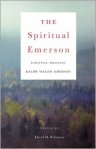
The Spiritual Emerson
Experience (1844)
Essay from The Works of Ralph Waldo Emerson

see also The Spiritual Emerson: Essential Writings by Ralph Waldo Emerson


Ralph Waldo Emerson
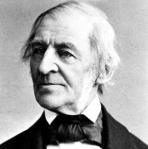
Ralph Waldo Emerson
1803-1882

Ralph Waldo Emerson was an American essayist, lecturer, and poet who led the Transcendentalist movement of the mid-19th century. He was seen as a champion of individualism and a discerning critic of the countervailing pressures of society. Emerson formulated the philosophy of Transcendentalism in his 1836 essay, Nature. Centered in New England during the 19th century, Transcendentalism was a reaction against scientific rationalism. Emerson disseminated his thoughts through dozens of published essays and more than 1,500 public lectures across the United States.

Internet resources for Ralph Waldo Emerson:

Third Principle of Biocentrism – The Observer

Nothing is Real Unless It’s Perceived

Quantum physics says that before a measurement is made, a subatomic particle doesn’t really exist in a definite place or have an actual motion. Instead, it dwells in a strange nether realm, without actually being anywhere in particular. This blurry indeterminate existence ends only when it is observed — in other words, nothing is real unless it’s perceived.


There are 7 Principles of Biocentrism, all of which are built on established science, and all of which demand a rethinking of the physical universe.

Third Principle of Biocentrism: The behavior of subatomic particles — indeed all particles and objects — is inextricably linked to the presence of an observer. Without the presence of a conscious observer, they at best exist in an undetermined state of probability waves.

Biocentrism
Biocentrism: How Life and Consciousness are the Keys to Understanding the True Nature of the Universe

Robert Lanza, MD
with Bob Berman

Second Principle of Biocentrism – Perception

Cognition is Awareness or Consciousness

Modern knowledge of the brain shows that what appears “out there” is actually occurring within our own minds, with visual and tactile experiences located not in some external disconnected location that we have grown accustomed to regarding as being distant from ourselves. We can refer to all cognition as awareness or consciousness.


There are 7 Principles of Biocentrism, all of which are built on established science, and all of which demand a rethinking of the physical universe.

Second Principle of Biocentrism: Our external and internal perceptions are inextricably intertwined. They are different sides of the same coin and cannot be divorced from one another.

Biocentrism
Biocentrism: How Life and Consciousness are the Keys to Understanding the True Nature of the Universe

Robert Lanza, MD
with Bob Berman

First Principle of Biocentrism

Background of Biocentrism

Nothing in modern physics explains how a group of molecules in your brain create consciousness. Our current model simply does not allow for consciousness, and understanding of this most basic phenomenon of our existence is virtually nil. Interestingly, our present model of physics does not even recognize this as a problem.

A new perspective, called Biocentrism, which accounts for life and consciousness has been put forward. In this view, life is not an accidental by-product of the laws of physics. The conclusions of biocentrism are based on mainstream science. Biocentrism cements the groundwork for new lines of investigation in physics and cosmology.


There are 7 Principles of Biocentrism, all of which are built on established science, and all of which demand a rethinking of the physical universe.

First Principle of Biocentrism: What we perceive as reality is a process that involves our consciousness.

An “external” reality, if it existed, would — by definition — have to exist in space. But this is meaningless, because space and time are not absolute realities but rather tools of the human and animal mind.


Biocentrism
Biocentrism: How Life and Consciousness are the Keys to Understanding the True Nature of the Universe

Robert Lanza, MD
with Bob Berman

Gratefulness – the Source of Happiness

The universe is gratis. It cannot be earned. From this simple fact of experience springs grateful living, grace-filled living. Gratefulness is the heart’s full response to the gratuitousness of all that exists. And gratefulness makes us grateful in a double sense. In gratefulness we open ourselves to this gratuitous universe and so we become fully graced with it. And in doing so we learn to move gracefully with its flow, as in a universal dance.

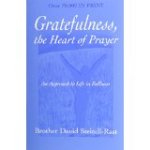
Gratefulness, the Heart of Prayer
Gratefulness, The Heart of Prayer: An Approach to Life in Fullness
David Steindl-Rast
.
.
.
.


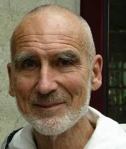
David Steindl-Rast
David Steindl-Rast (Wikipedia, Gratefulness website)
born 1926

David Steindl-Rast is a Benedictine monk, notable for his active participation in interfaith dialogue and his work on the interaction between spirituality and science. He meditates and writes on “the gentle power” of gratefulness.


Books written by Brother David Steindl-Rast include:


Want to Be Happy? Be Grateful
TED Talk given by David Steindl-Rast

The one thing all humans have in common is that each of us wants to be happy, says Brother David Steindl-Rast, a monk and interfaith scholar. And happiness, he suggests, is born from gratitude. An inspiring lesson in slowing down, looking where you’re going, and above all, being grateful.